
Wren Bioscience brings precision to the dairy industry
Wren Bioscience is developing a test that detects bacterial contamination in milk, helping dairy processors make faster, data-driven decisions instead of relying on fixed cleaning schedules.
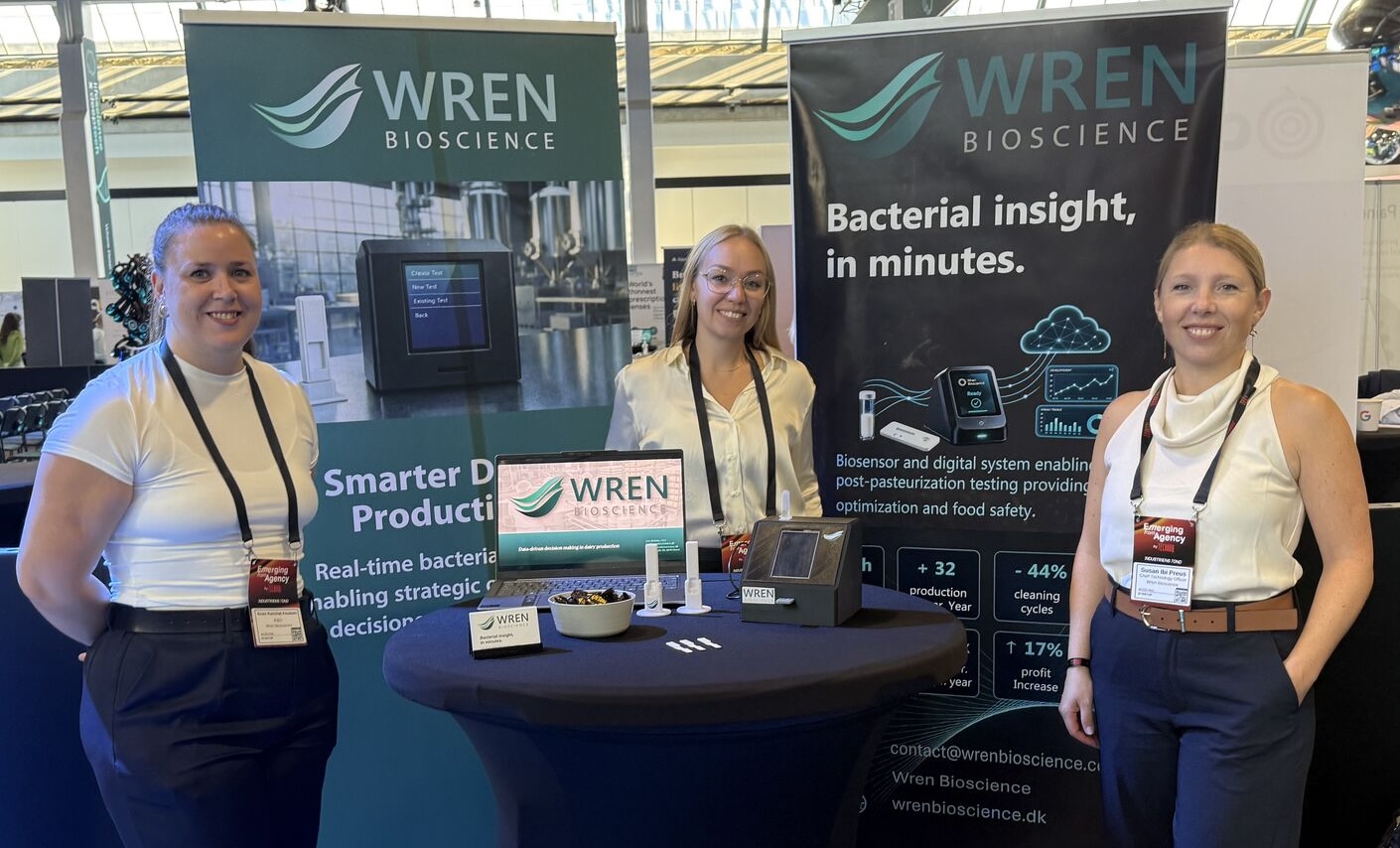
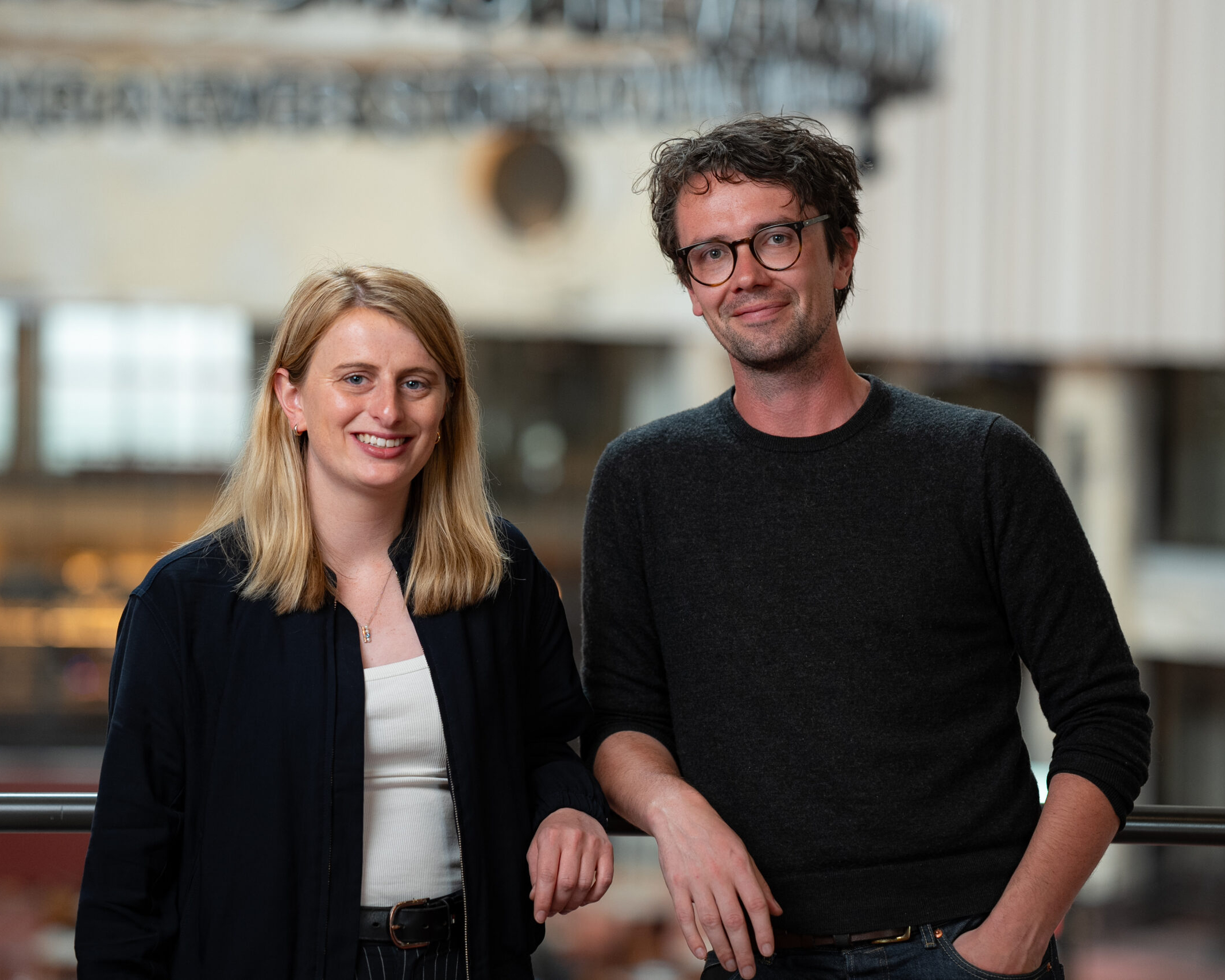
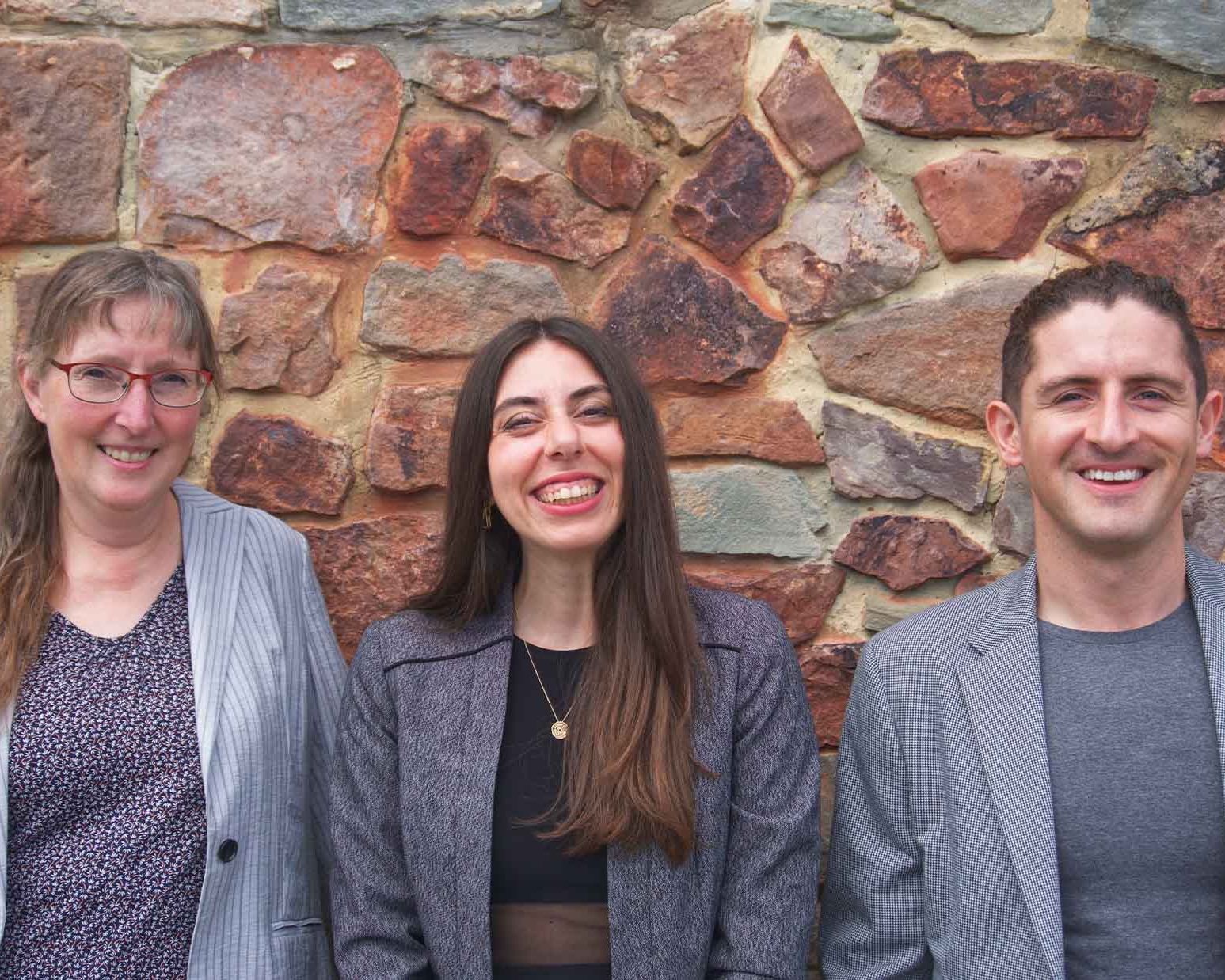
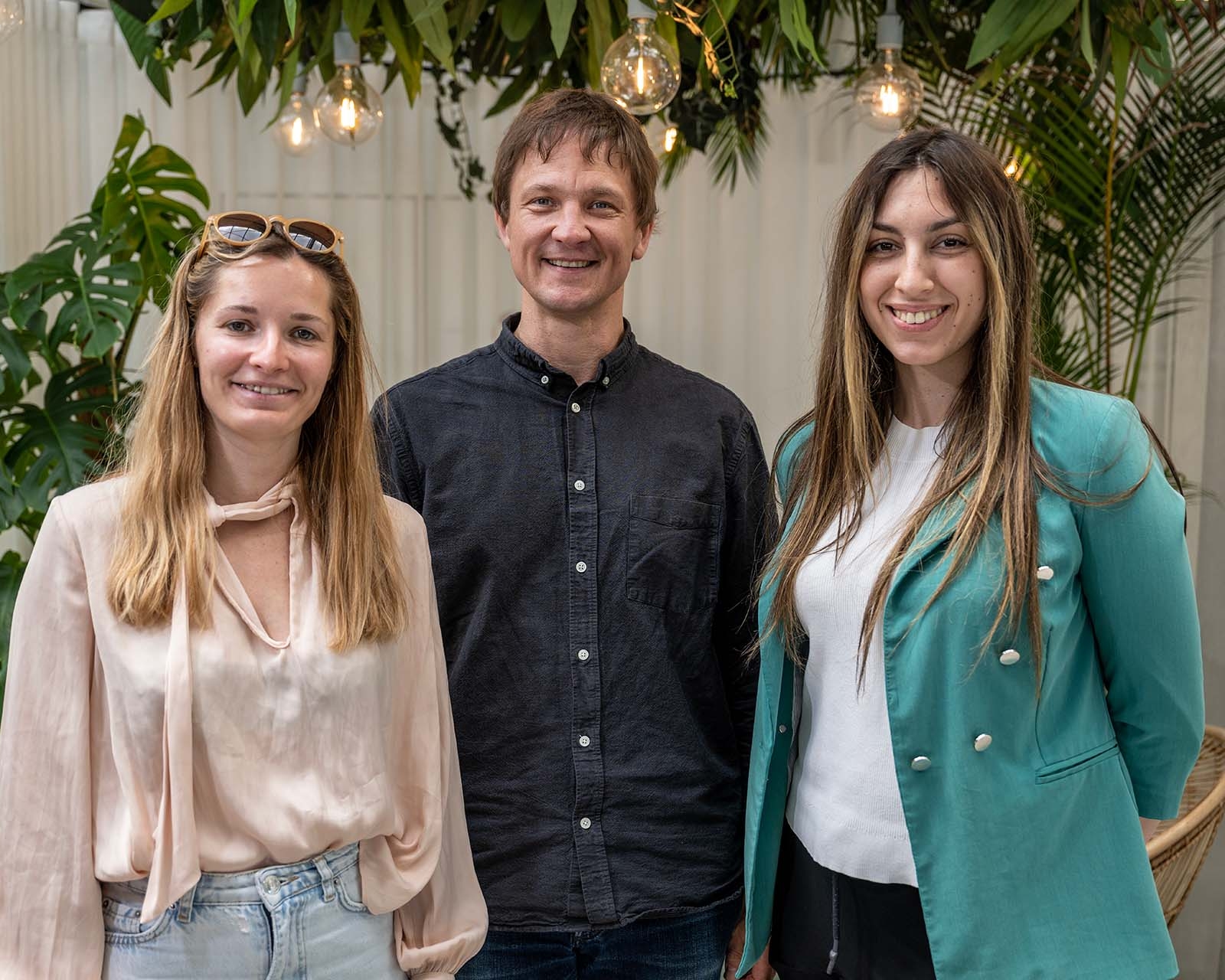
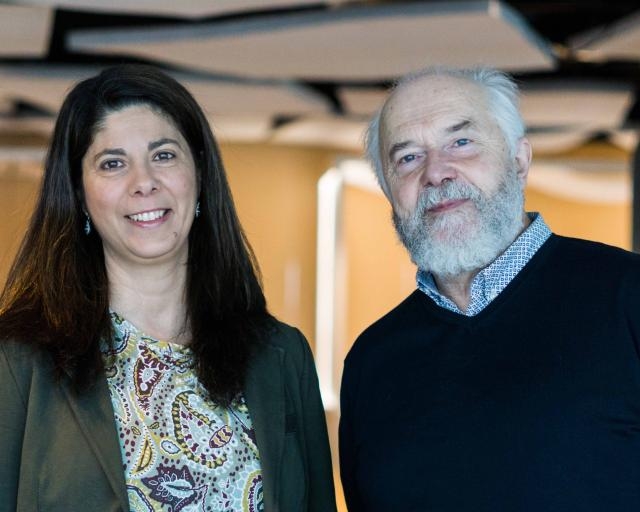
Co-founders Lea Holritz, Susan Ibi Preus, and Peter Conrad Ottesen are building Wren Bioscience on a foundation that goes back several years.
“It all started with a project on mastitis in cows,” recounts Preus, who has been collaborating with Holritz at the Technical University of Denmark (DTU) since 2019.
“Mastitis is one of the reasons milk is excluded from the commercial milk stream. This so-called waste milk can still be used to feed calves, with one caveat: it may contain E. coli, which can cause severe diarrhea in young animals.”
Preus and Holritz were part of a team that developed a rapid lateral-flow tests to detect E. coli and other bacteria in milk quickly, accurately, and at low cost, both in the context of mastitis diagnostics and for quality control of calf feed. These projects laid the groundwork for their broader work on lateral-flow technology for milk analysis.
The difficulty with milk
“People have the idea that blood is difficult to work with,” says Preus, “but milk is equally complex! Its composition varies widely between samples and even over the course of a day, with fats and other components that can interfere with bacterial detection.”
Lateral-flow assays use the same basic paper-based principle found in many rapid diagnostic tests, including COVID tests. But transferring that principle to milk requires considerably more than placing a sample on a strip.
A central part of the team’s technical work has therefore focused on standardizing milk samples in a way that allows relevant bacterial signals to be measured reliably. Preus and Holritz had already worked with analytical technologies in other research contexts and immediately recognized both the challenge and the wider potential of solving it.
Holritz, having just become a mother, began to also look at the research from a different perspective. With substantial resources going into bovine milk analysis, she wondered why comparable, accessible testing was far less developed for human milk. That question became central to her PhD, which focused on a simple point-of-use test for human milk quality.
“Human milk is important for all infants, but especially for premature infants and infants who are ill or born with complications,” she says. “When a mother’s own milk supply is insufficient, neonatal intensive care units may rely on donor milk supplied through milk banks.”
These milk banks are responsible for collecting, handling, storing, and quality-assuring donor milk, including making sure it is free from harmful pathogens. Simple decentralized tests, however, remain limited.
“People have the idea that blood is difficult to work with, but milk is equally complex! Its composition varies widely between samples and even over the course of a day, with fats and other components that can interfere with bacterial detection.”
Susan Ibi Preus, co-founder Wren Bioscience

Application-driven from the start
Holritz is quick to admit she never planned on doing a PhD, but in the end saw it as a stepping stone towards valorization. “From the start, I was very keen on the real-world application aspect,” she says. “I even wrote a dedicated commercial chapter in my PhD.”
During their time at DTU, the future founders were able to investigate different use cases, test assumptions, and make use of the university ecosystem to explore where the technology could create the most value.
They found a valuable partner in Peter Conrad Ottesen, business developer and innovation partner at the university. While Holritz explored the commercial opportunity in human milk, Ottesen investigated the commercial aspects of bovine milk analysis.
Both tracks generated interest from potential users. And the team continued to explore both applications in parallel before deciding to pursue the technology through a company.
“I think our position today is more solid because of our time in academia as researchers,” says Holritz. “And we are lucky to share the same kind of motivation to make a difference with our research.”
At some point, push came to shove, and it looked like the right time to take the leap and found Wren Bioscience. Ottesen had been closely involved in the commercial strategy and patenting process, so naturally, Holritz and Preus wanted him on the founding team.
“When Lea and Susan called a meeting unexpectedly, I was worried that I had done something wrong,” Ottesen laughs. “I thought I had missed a deadline or something.”
As a Innovation Partner at DTU, he is used to evaluating new technologies and is regularly approached about joining new ventures. He usually declines, he says, but not this time.
“What convinced me to say yes is the team,” he says. “Lea and Susan have an unusual drive, and between the three of us, we bring a strong mix of complementary expertise. I also believe the timing is right to build a successful company around this technology.”
The team tested their business case through the Danish Tech Challenge, where Wren Bioscience finished as a finalist. Securing Innofounder funding (from Innovation Fund Denmark) enabled Holritz and Preus to move into the company full-time in 2026.
“Our platform will help dairy processors monitor bacterial levels more quickly, supporting more informed processing decisions. The longer-term ambition is to adapt the same platform for human milk banks and, eventually, potentially for use closer to the point of care or at home.”
Lea Holritz, co-founder Wren Bioscience
Bringing real-time insight
For its first market, Wren is returning to where the story began: the dairy industry.
Raw milk naturally contains bacteria before it enters a production facility. Pasteurization reduces bacterial load significantly, but some heat-resistant bacteria can survive and continue to accumulate during production.
Dairy processors therefore rely on strict cleaning routines to keep bacterial levels under control. “Without rapid insight into the bacterial load during production, these cleaning cycles are often based on fixed schedules rather than on real-time information,” says Preus.
Wren aims to provide that additional insight. “Our platform will help dairy processors monitor bacterial levels more quickly, supporting more informed decisions about when cleaning is necessary, reducing unnecessary downtime. At the same time, faster detection will help identify problematic batches earlier in the production process.”
For industrial dairy users, Wren is developing the assay in a device.
Holritz: “The longer-term ambition is to adapt the same platform for human milk banks and, eventually, potentially for use closer to the point of care or at home.”
The right fit
Wren first came into contact with biotope through cold outreach.
Ottesen had compiled a list of incubators and pre-seed investors relevant to their field, and Holritz condensed and approached a select few, including biotope.
“During the very first call, I instantly felt that there was a fit between our needs and biotope’s approach,” says Holritz. “The team’s deep motivation to help startups is amazing. It felt almost too good to be true, but our experience at basecamp confirmed our intuition that biotope offers the kind of hands-on, founder-friendly support we were looking for.”
Preus concurs: “The people at biotope are extremely founder-friendly, but at the same time they push you and set ambitious demands for the people they take into the program—and we appreciate that.”
“Many startups get set in their ways and feel they have to prove something nationally before they go international; biotope challenges that way of thinking and has a very clear international approach,” adds Ottesen.
He points to the depth of the evaluation process as another differentiator. “I feel like they treat their startups fairly and give good feedback, with due diligence on both the technical and commercial side. You’d be surprised how often you see investors following whatever market trend is popular, not really taking the time to assess the actual merit of the team and the technology. With biotope, that’s clearly different: they look at the people and the case, not just the trend.”
Proof of business
What will the next phase in the journey bring? The founders sum it up in three words: proof of business.
“We are seeking proof of business together with biotope, together with their network, and together with dairies in Europe and outside Europe,” says Holritz. “Of course, we also have technical work to do. We always will. But now we want to validate what we have been building so far and accelerate from there.”
Preus adds that proof of business includes several parallel tracks: customer validation, technical milestones, commercial progress… “We look forward to the biotope team pushing us, in a good way, to do what we set out to do.”
“And not only them,” says Ottesen. “Building a startup will require lots and lots of hands, so the support of biotope’s extended network will be of immense value.”
He adds that, with the help of biotope, Wren hopes to expand its network across Europe: “We are well connected in Scandinavia, but we need to expand our horizon to both customers and distributors across Europe,” he says. “And now we can brag that we have biotope on our side!”
More News















Have you got what it takes?
- Pressure-test your biotech with expert feedback
- Align your team and sharpen your strategy
- Turn your startup into an investment-ready business