
Biotech: high risk, high impact for the planet
Biotech isn’t too slow. The real question is where it creates unique value. In this biotope white paper, Ilana, who works closely with portfolio startups as a stakeholder manager, shows how its strength lies in enabling new production systems, especially where incremental solutions are reaching their limits.
The wrong question
Biotechnology may not always fit neatly into the urgency of planetary health. It is slower to develop, capital intensive, and layered with technical and regulatory complexity – an uncomfortable match for a world facing collapsing ecosystems, soil degradation, and increasing climate volatility.
Yet this perspective misses something important. The real challenge is not whether biotech is too slow or too complex, but whether it is being applied to the right problems.
From an investment perspective, this becomes most relevant in two domains: food – where we must feed a growing population sustainably and resiliently – and resources – where constrained inputs are forcing a rethink of how we produce materials and build circular systems.
Why biotech? Why now?
Biotechnology is not a universal solution, but it becomes critical where traditional optimisation reaches its limits. Its value lies in creating fundamentally new production pathways, not in marginally improving what already exists.
The biggest mistake is applying biotech where simpler solutions would scale faster. But the opposite is also true: in some areas, incremental solutions are already reaching their limits.
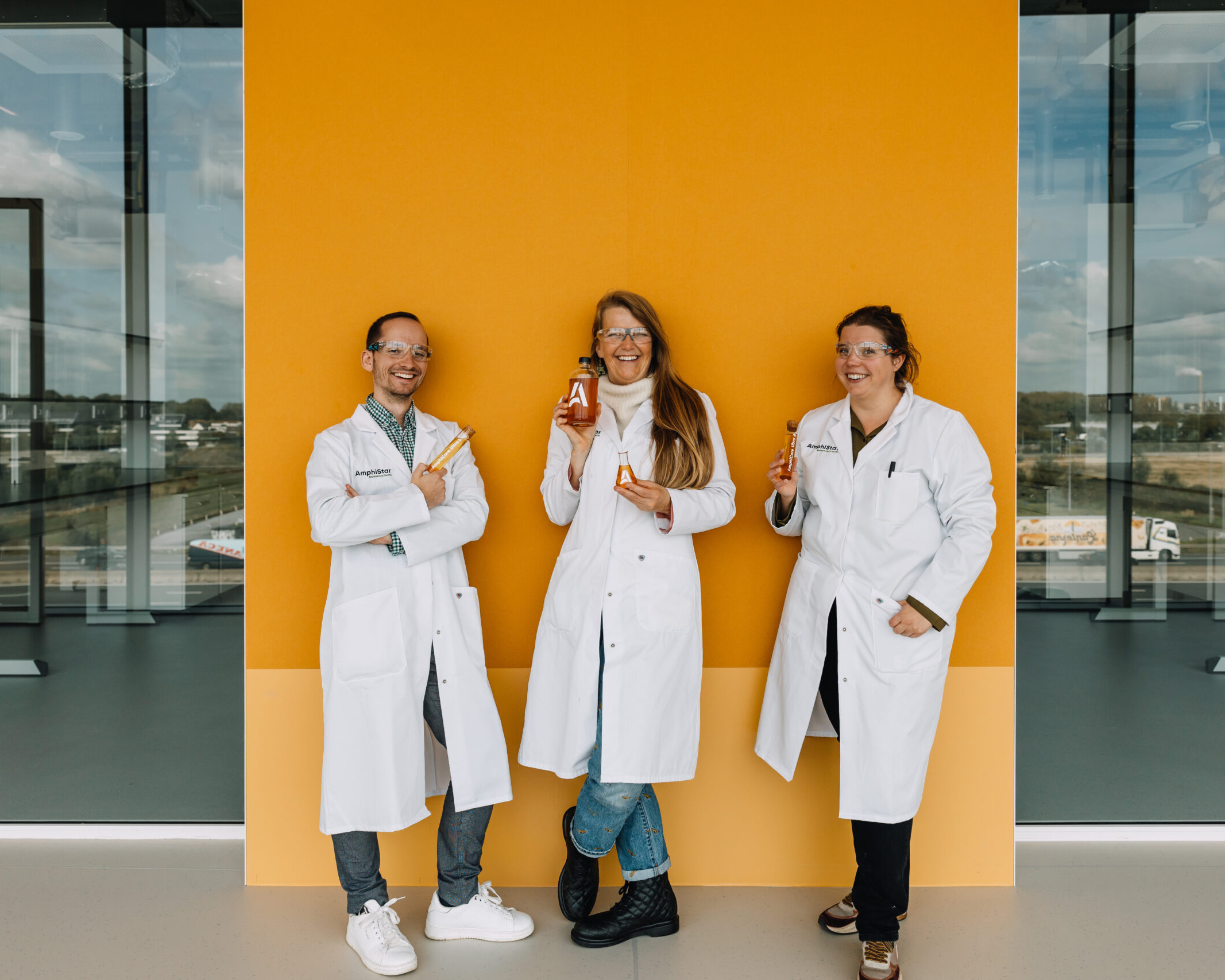
Take supply chain resilience. Microbial engineering is making it possible to produce molecules, proteins, and functional ingredients without relying on fragile agricultural inputs or geopolitically exposed supply chains. Companies like Amphistar are producing biosurfactants through fermentation using waste streams, while others, such as Lantana Bio, are producing natural pigments through microbial fermentation, and thus creating alternatives to crop-based supply chains that are increasingly exposed to climate volatility. chemicals and create more stable supply chains.
These solutions do not replace existing systems overnight. They add resilience by creating alternative production pathways decoupling growth from land, climate, and resource volatility.
At the same time, advances in sequencing, genetic engineering, and AI-driven design are significantly compressing discovery and development cycles. The feasibility of planetary health biotech has shifted in ways that were not possible even a decade ago.
What remains one of the biggest bottlenecks is translation: turning scientific breakthroughs into scalable, affordable solutions.
The earliest decisions – what problem to solve, which biological pathway to pursue, how to approach scale – determine whether a biotech solution ever becomes viable. This is where biotope focuses its work: engaging at the point where scientific and strategic choices are still shaping what can become investable.

Why planetary health biotech is hard, and why that’s not a reason to dismiss it
Planetary health biotech sits at the intersection of scientific ambition and industrial reality, and that gap is where most of the difficulty lies.
Three constraints stand out:
- Market reality
Many applications are in sectors such as agriculture, food, and materials, where margins are thin and incumbents are highly optimised. New solutions only succeed if they deliver a clear advantage on cost, performance, resilience, or regulatory positioning – often all at once. - Scale-up complexity
Demonstrating results in the lab is only the beginning. Scale introduces entirely different challenges in downstream processing, formulation, and manufacturing. Companies need to attract capital to demonstration-scale production before achieving regulatory clarity or commercial traction, creating a fundamental misalignment between validation, funding, and market readiness. - Regulatory timelines
Particularly in Europe, regulatory pathways can significantly extend timelines and shape which innovations reach the market.
Overlaying this is recent sector history. Breakthroughs have been accompanied by highly visible disappointments, especially in areas like alternative proteins. This has increased investor scepticism, not because biology failed, but because expectations around timelines, market readiness, and value capture were misaligned.
These are not reasons to dismiss the field. They are signals that success depends as much on timing, positioning, and execution as on scientific innovation.

What makes planetary health biotech investable
What makes planetary health biotech investable starts with deliberate choices. Not every planetary problem requires a biotech solution, and not every biotech solution deserves venture backing.
“The key investment question is not whether a problem is important enough to justify a biotech solution, but whether biology creates a unique advantage that alternative technologies cannot. The most attractive opportunities arise when biology functions as a new production paradigm rather than a substitute for existing processes. In these cases, biotech does more than improve sustainability metrics; it enables new products, supply chains, and manufacturing systems that can generate both planetary impact and venture-scale value” says Carolina Villa from Nucleus Capital
Biotech creates value when it enables something fundamentally different – not just more efficient. In practice, investable companies in this space tend to share a few characteristics:
They replace fragile systems, rather than optimise them. Biotech is most compelling when it removes dependencies on land, climate, or extractive supply chains – not when it marginally improves them.
They integrate into existing value chains: Solutions that can plug into current infrastructure whether in agriculture, food, or industrial processes can scale much faster than those requiring entirely new systems. For example, companies like Protealis are developing crop varieties tailored to existing farming systems, allowing adoption through established seed and distribution channels rather than requiring a full reset of agricultural practices.
They have a credible path to economic viability early on: Not all biotech requires long and capital-intensive timelines. Some approaches, such as lightweight fermentation platforms like Zymofix, can deliver immediate environmental and economic gains and reach the market relatively quickly.
They are built with scale in mind from the start: The transition from lab to industrial scale is often where value is lost. Investable companies anticipate this early – in process design, partnerships, and capital strategy.
This is where biotech moves from being an interesting technology to a credible investment opportunity.
The risk of standing still
From an investment perspective, planetary health biotech is not the fastest or easiest path. It requires patience, tolerance for complexity, and a willingness to engage with longer time horizons. But the greater risk lies elsewhere.
If we fast forward a few decades, the question will not be whether biotech should have been part of the solution, but whether it was deployed where it mattered most.
Some applications will prove unnecessary. Others will become foundational – not because they were faster or cheaper, but because they enabled outcomes that alternative approaches could not deliver.
“For biomanufacturing to be implemented at scale, we need a real economic or societal urgency. When climate change drives up crop prices, and geopolitical instability affects costs or availability of energy or raw materials, Europe’s access to food, medicines, and critical chemical building blocks may come under increasing pressure. In that context, biotech solutions will shift from being a nice-to-have to becoming a strategic necessity,” said Cindy Gerhardt from Planet B.io
If we want more of these outcomes, the complete innovation ecosystem needs to evolve alongside the science. Investors will need to adapt expectations around timelines and risk. Industrial partners will play a key role in enabling scale. And public actors have a clear role to play in de-risking early stages and accelerating regulatory pathways.
The future of planetary health cannot be built on incremental improvements alone. It will depend on the ability to deploy biotech deliberately – at the points where it can change the system, not just optimise it.

More News


































Have you got what it takes?
- Pressure-test your biotech with expert feedback
- Align your team and sharpen your strategy
- Turn your startup into an investment-ready business